KEY POINTS:
-
Moving to Azure allows SMBs to shift from CAPEX to OPEX, becoming more cost-effective in the long run by paying only for what they use.
-
Azure provides unmatched scalability and flexibility, so SMBs can quickly adapt to changing business needs.
-
Small businesses can benefit from enterprise-security and technology without having to pay enterprise-cost.
-
All your Microsoft tools (Entra ID, Office 365, Teams & cloud infrastructure) can be integrated into one, unified platform—making management simpler and more cost-effective for SMBs.
What is Microsoft Azure?
Microsoft Azure is a cloud computing platform developed by Microsoft. It offers services for building, deploying and managing infrastructure and applications through a global network of Microsoft-managed data centres.
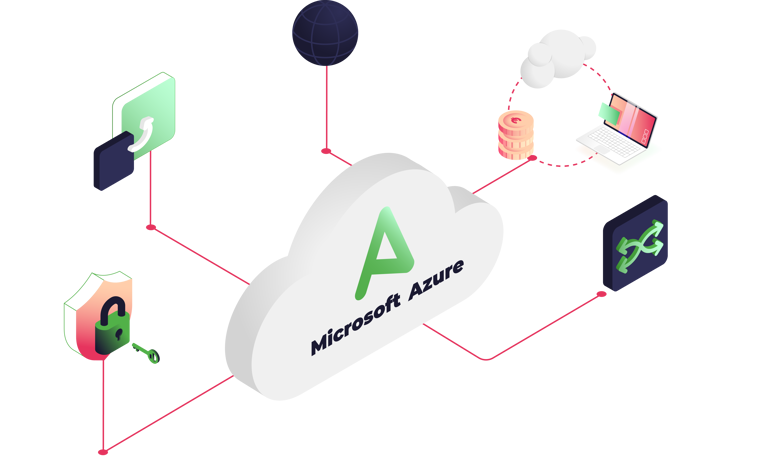
The cloud platform offers everything an organisation, from SMB to big enterprise would look for—from security, to platform services, to go-to-market strategies.
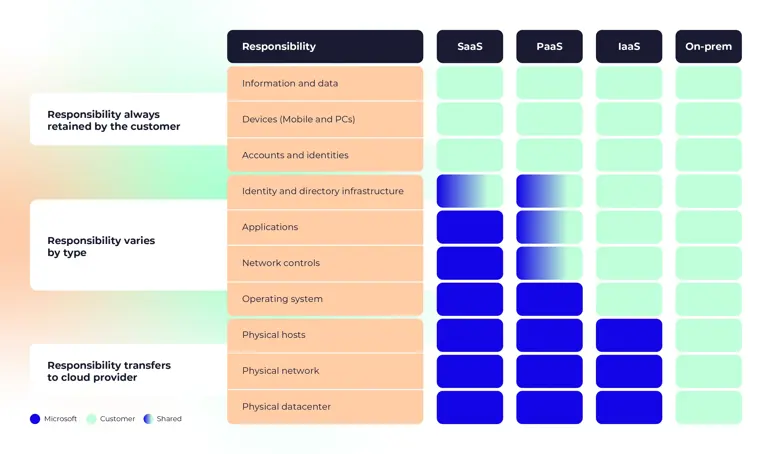
It provides Infrastructure-as-a-Service (IaaS), Platform-as-a-Service (PaaS), and Software-as-a-Service (SaaS) that allow businesses and individuals to access computing resources such as virtual machines (VMs), databases, storage, networking, AI, analytics and Internet of Things (IoT) on demand.
The value of the public cloud
With the public cloud, you can do more with less, especially when using PaaS services where you outsource tedious Server management tasks to Microsoft.
It follows a consumption-based model, you only pay for what you use. Plus, almost all products and services in the public cloud are available to everyone. In the cloud, it’s more straightforward and far quicker to adapt to changing and evolving business needs. The movement from capital expenditures (CAPEX) into operational expenditures (OPEX) — allows you to get so much more in terms of the availability, redundancy, greater uptime, etc.
What are the benefits of Microsoft Azure for Small Business (SMBs)?
Here are some key reasons small and medium-sized businesses adopt Microsoft Azure:
1. Scalability and Flexibility
Unlike traditional on-premise servers that need large upfront costs, Azure lets you pay only for what you use, and anyone can spin up and start deploying resources in minutes. If you suddenly experience peak traffic and your systems are overwhelmed, the ability to scale means you can add more resources to handle increased demand better.
And scalability goes both ways. In the cloud, you also have the flexibility to wind things down or change direction as needed. That is to say, if demand drops off, you can reduce your resources and thereby lower your costs. For SMBs experiencing growth or fluctuating demand, Azure cloud infrastructure lets them adapt their business without the delays or costs of traditional hardware.
2. High availability
Azure is a highly available cloud environment with uptime guarantees depending on the service. These guarantees are part of the service-level agreements (SLAs). Each Azure service has its own SLA and uptime commitments; SLAs of 99%, 99.9% and 99.95% are common across the Azure service catalogue. This is typically much higher than traditional on-prem services without built-in redundancies.
Compared to other cloud providers like AWS, Azure generally provides a slightly higher SLA percentage for specific configurations, such as single VMS and Multiple-instance VMs.